
If overcoming inertia is how a hitter moves sideways, creating leverage is where a hitter works from when both feet come back to the ground. Snapshots in time aren’t great ways to evaluate the totality of a movement. But the geometry of where guys work from at landing gives us a lot of clues into what kind of a mover that hitter is. It tells you where they’re strong, what they’re comfortable with, and what they lean on when they want to get the bat moving with some speed.
Some things I like to look at in this phase include:
- How wide of a base do they create? Do they land open, neutral, or closed?
- How much posture do they land with? Is there symmetry in flexion between the chest, hips, and knees?
- Where is the chest in relationship to the hips? How much hip shoulder separation do they create? How much counter rotation exists at the hips and/or chest?
- Where is the majority of their weight distribution? Do they favor the back leg? Front leg? Keep things more centered?
- What kind of angles and spacing do they create between the arms and chest? Where is the bat in relationship to the torso?
Before we start to hone in on the essential elements, let’s start with this: Everyone wants to create force. The ability to create and apply force comes down to your ability to create leverage at specific points during the swing. How this leverage is created is a style, but creating some sort of leverage is essential. Everyone needs a mechanical advantage in the box. How you do it is a part of your unique fingerprint as a mover.
I’m going to evaluate two things as it pertains to how hitters create leverage: Space and tension. You need tension to motivate the body to move, but you also need space for the body to move efficiently. Tension without space gets you stuck. Space without tension doesn’t give you anything to leverage against.
Finding the balance between both gives you plenty of leverage to move a thirty ounce bat really fast.
…
From a spacing standpoint, below are some questions I would ask:
- Where are they in relationship to the plate?
- Where is their chest in relationship to their hips?
- Where are their arms in relationship to their chest?
Where guys stand in relationship to the plate plays a big role in the ability to get the barrel square. Whether you’re closer to it or further away it is a style. But if you can’t get the barrel delivered because of where you stand in relationship to home plate, you need to move to where you can. It’s not to say you have to cover all seventeen inches with ease. But if you’re fighting against your body to get the barrel square over the heart, you probably need to create some space somewhere – whether it’s where you start, land, or how you move to and through those positions.
The hips and chest have to function in a similar regard to give the hands a window to work inside the ball. To evaluate whether they are or not, I’d look at two specific moves:
- Do the hips maintain the same degree of flexion during hip rotation
- Do the hips rotate independently of the chest
The spacing you create and maintain at the back hip isn’t just important for lower half purposes. It’s the foundation for the early part of your bat path. During the loading pattern, every hitter is going to find their optimal degree of hip flexion. When peak hip flexion has been achieved, the hips are going to start to rotate. As the hips rotate, hitters need to maintain the same degree of hip flexion achieved in the load for spacing and directional purposes. If hip flexion increases, the pattern becomes a bail – impacting direction. If hip flexion decreases, the hips end up extending prematurely – impacting space. This is common with guys who feel stuck or “tied up.” Their barrel can’t get delivered consistently because the hips get in the way (more on this here).
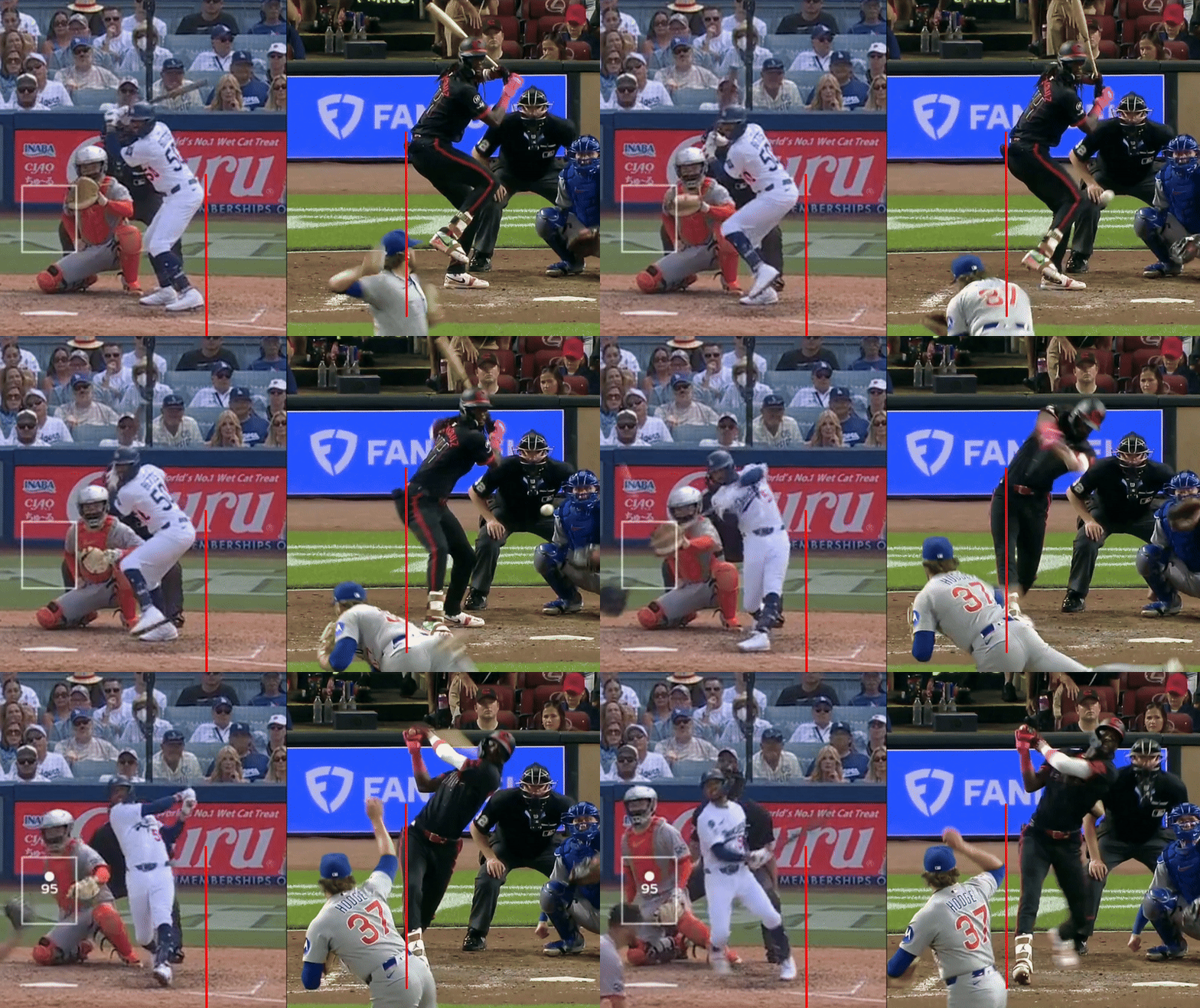
How the hips clear space for the hands brings us to the second point. The concept of hip shoulder is a foundational move. The amount of hip shoulder created is a style. Being able to rotate the hips independently of the chest gives us a two-for-one in the swing: It clears space for the chest to rotate, while also creating tension in the oblique abdominals – the muscles responsible for trunk rotation. The swing is a sequence. If each part handed off the baton to the next at the same time, it would make for a really short relay race. Segments need time to pick up speed. This subtle delay in action creates a window for the chest to build some speed. Fast chests create fast bats.
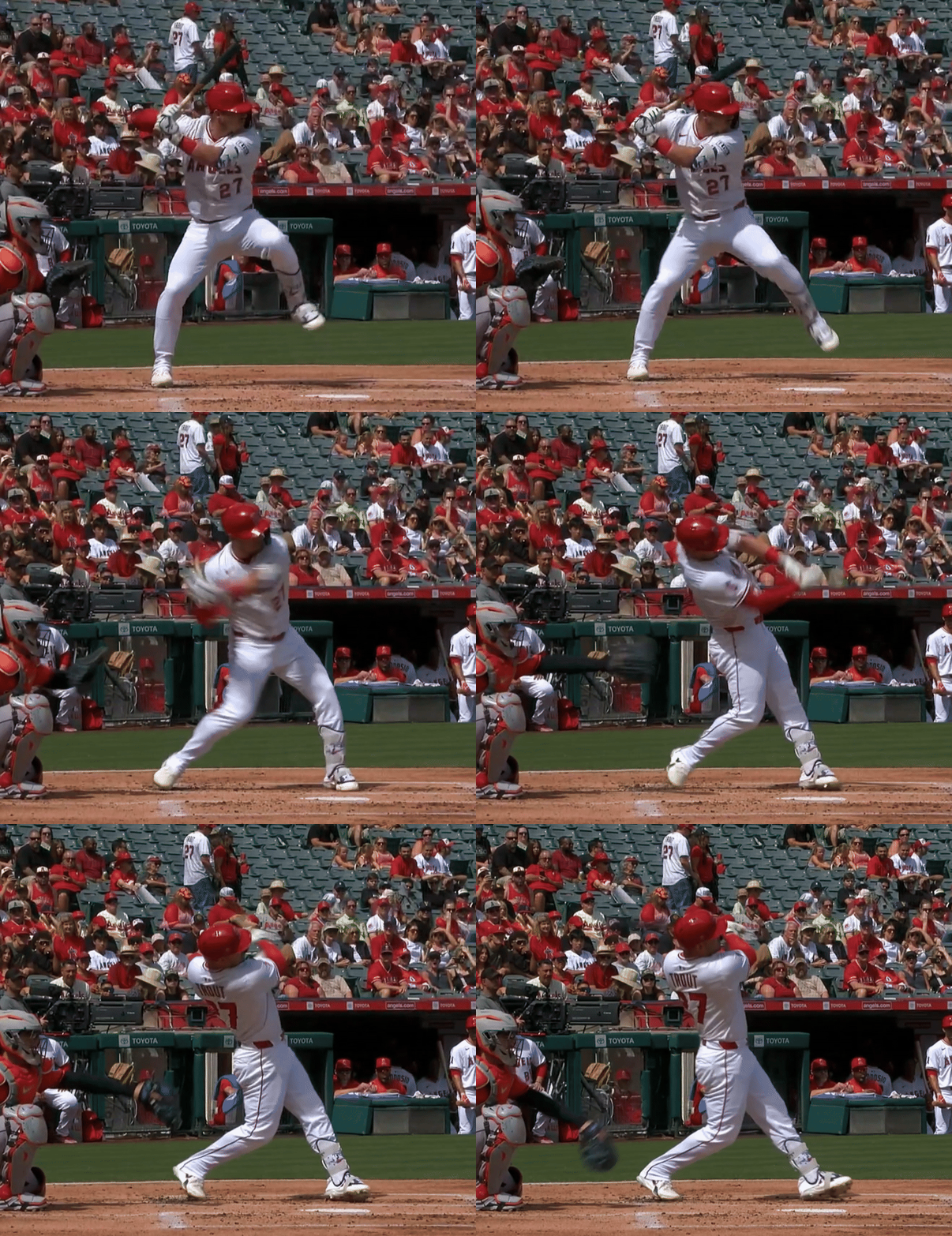
Trout using less hip to shoulder separation
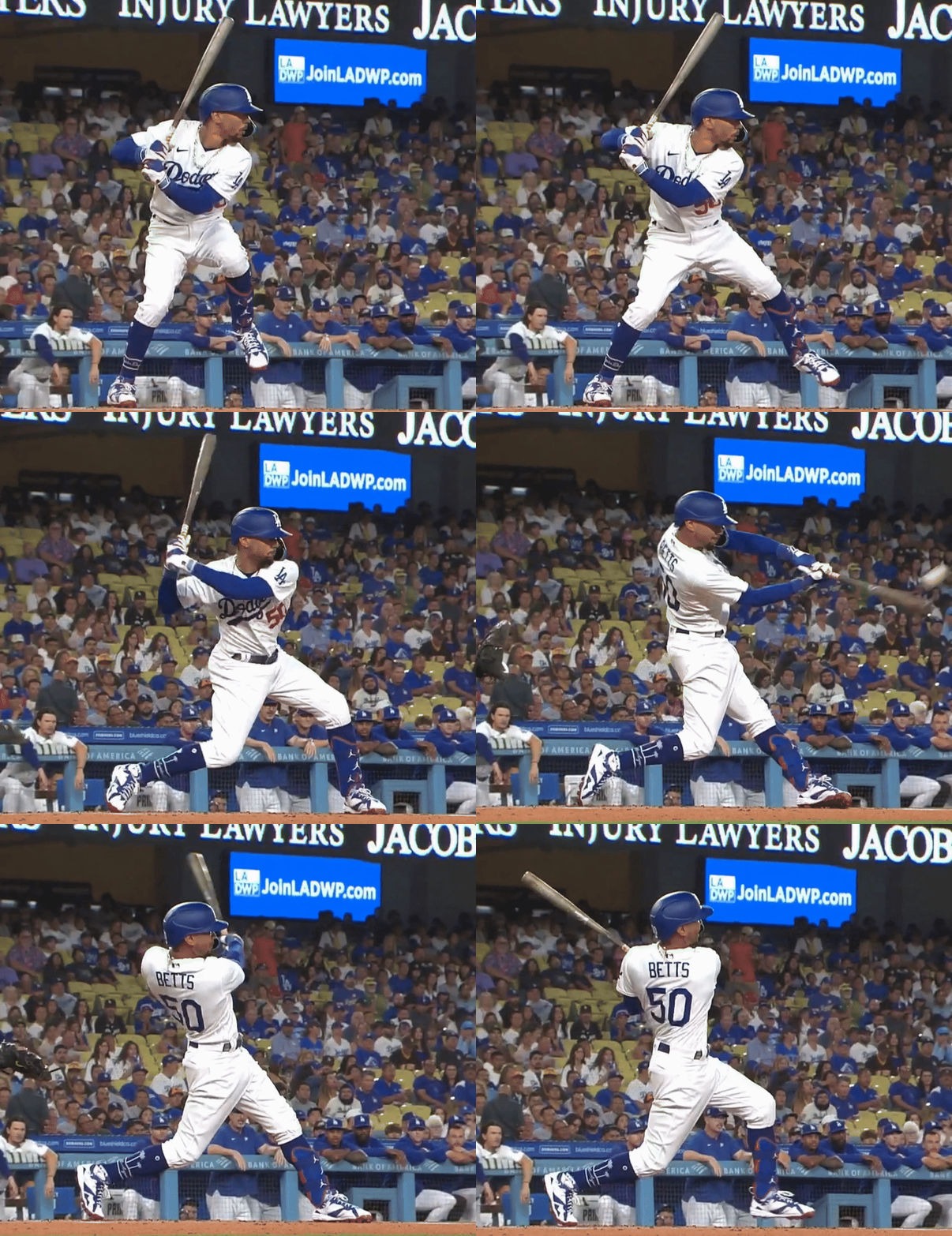
Betts utilizing more hip shoulder separation
Hips and shoulders don’t get married together by accident. It’s usually an indicator something upstream didn’t do its job. In some cases, it could be the result of excessive counter movements at the middle (what closes together opens together). In other cases, it could be due to an under active back leg loading pattern (sway/crash). During the swing, it’s not uncommon to see these kinds of guys slip into extension based compensation patterns (e.g. vaulting, premature hip extension). If your chest doesn’t have space to turn, your body is going to find space using other strategies – irregardless of whether they’re efficient or not.
The interaction between these movements is more important than how they exist in isolation. They need to be evaluated as a relationship – not two different boxes to check. There’s a lot of ways you can create hip flexion. There’s not as many ways to create hip flexion that positively influence hip rotation. There’s a lot of ways you can clear the hips prior to trunk rotation. There’s not a lot of ways you can do it while still holding on to your back leg. If your options for movement are endless, you’re operating much closer to style. But if those options start to find limits, you’re moving a lot closer to substance.
Once you have the space to operate, you just need some tension to tie it altogether.
…
It’s one thing to find positions. It’s another to be able to harness those positions to create force. Your ability to harness those positions comes down to how you create tension: Where you create it and when, how you create it, and how much of it you create. Spacing might open up our windows to move. But your ability to capitalize on those windows comes down to where, when, and how you find tension in your body as you move. It’s how we prepare the body to produce force.
Tension is a little tougher to evaluate because you can’t see it the way you can see angles, positions, or postures. Hitters also perceive tension very differently (e.g. some get better feedback proximally vs. distally). Asking where someone “felt” something won’t always give you what you need to know. But we can make some inferences on where guys should carry tension based on how they move in certain contexts.
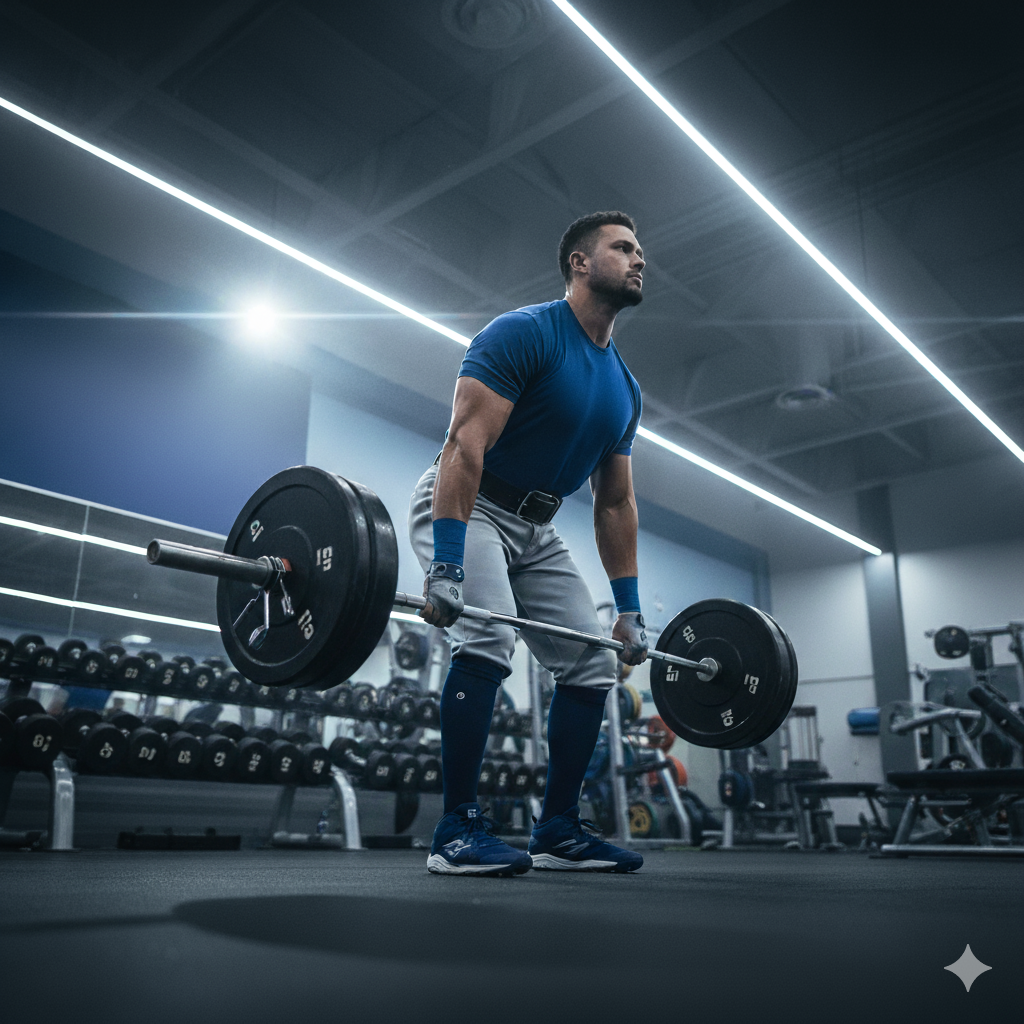
For example, think about how your body is going to organize in a deadlift pattern. Before you pull, you have to find a way to protect your lower back. To do this, you’re going to 1) hinge at the hip, and 2) brace your core. The hinge is the movement required, but the tension you create in the core is the critical component to the lift. It doesn’t just protect your back. It bridges the work you’re doing between the upper half and lower by keeping integrity of the hips and torso (e.g. avoiding rounding of the back). This is how you create leverage in the lift. If tension in the core is lost, the back starts to round and this point of leverage is ultimately lost.
If you were to rotate a cable machine with one hundred pounds attached, you’d notice similar themes with where the body creates tension. The spine needs stability before it trusts the body to rotate with any sort of substantial speed or force. The forces on the spine are too large. It needs help from the surrounding musculature in the hips and core. If there’s tension in the middle, the extremities are free to execute the task at hand with speed and precision. But until enough tension has been created, your body is going to keep a governor on the movement – whether you’re deadlifting, rotating a cable machine, or swinging a bat.
Now creating tension is one thing. How you create tension is a completely different thing, but equally as important. Going back to our hip shoulder example from above, you can create tension in your core in very different ways. You can create it through muscular contractions by using the external obliques or transverse abdominis, for example. You can also create it through counter movements. Adding counter rotation at your chest is going to increase the length of your external obliques. This increase in length will accompany an increase in tension to protect the muscle from becoming over stretched.
“Turning your body into a giant rubber band might make you feel like you have a lot of tension, but it doesn’t mean you’re actually using muscles. You’re just making them longer.”
Both strategies increase the tension you feel in your obliques, but both require different movement strategies. One actively recruits muscles. The other passively stretches muscles. These are two very different things. Turning your body into a giant rubber band might make you feel like you have a lot of tension, but it doesn’t mean you’re actually using muscles. You’re just making them longer.
This becomes dangerous on multiple levels. If muscles aren’t recruited to do the work, the spine gets left out to dry. It has no structural support to accept the forces produced during high velocity rotational movements. It also has to close a big gap in separation – something your body really doesn’t like. If you don’t believe me, try rotating one hundred pounds off a cable machine with your chest heavily counter rotated in relationship to your hips. You might feel more tension before you pull, but you’ll feel a lot stronger if you center your chest closer to your hips as you pull.
Not to mention – the more you turn your chest at the start, the more work your barrel has to do to simply get back to neutral. Don’t sacrifice the spacing you need for the swing with the desire to create a bigger “stretch.” Keep the integrity of the movement in tact. Rely on muscles to create tension. When some is enough, don’t sell out for more. If you create enough at the right moments of time, you’ll have the leverage you need to capitalize on everything you’ve created to this point. And if you do enough right to this point, the last part – how you rotate – should be the most fun.
You can make some errors in the first and second act. The final act is the part you have to nail.
*All video/gif content is from MLB film room