
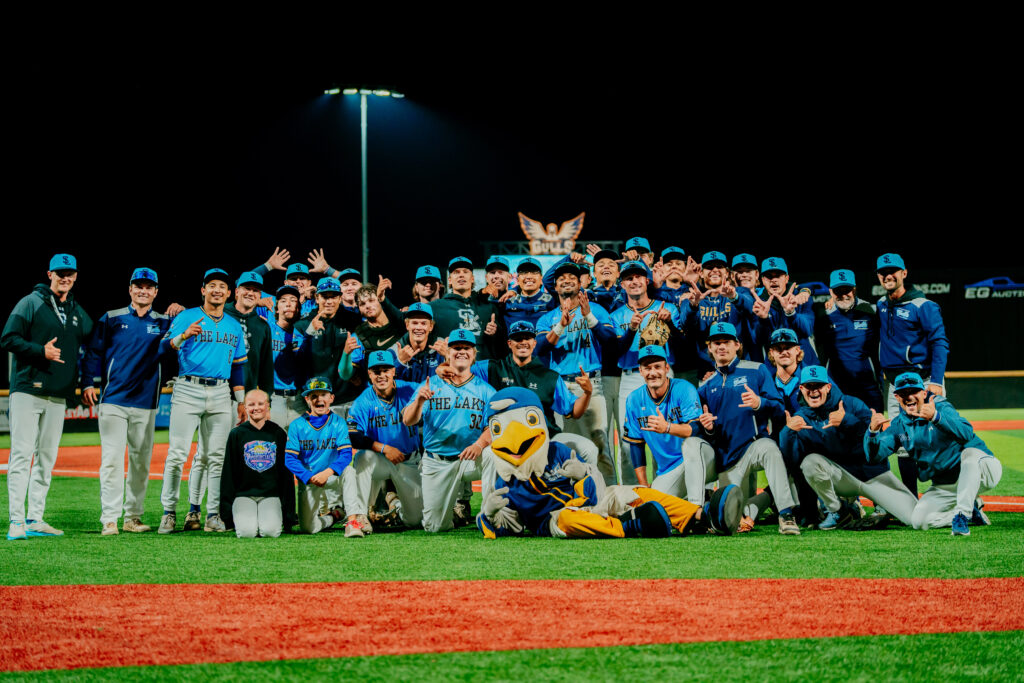
I’m walking out of the movie theater on a cold, damp August evening in Sylvan Lake – a lively summer community located between Alberta’s two big markets of Edmonton and Calgary. The overcast sky and residue of an earlier rainstorm made it feel like much of my first month living in Western Canada. The only difference being this time, I’m comfortable in a sweatshirt over a winter jacket.
I had just watched Spider-Man: Brand New Day starring Tom Holland as Peter Parker. I was always partial to Tobey MacGuire’s version of Spiderman growing up. Holland did a nice job filling those shoes. The plot was constructed much differently, painting Peter as a lonely superhero with no friends, consumed by his work, and fueled by delivery pizza. He chose to push his best friend and girlfriend (MJ) out of his life after the death of his Aunt May. Unlike Andrew Garfield’s version of Spiderman (poor Emma Watson), he didn’t want to lose the people closest to him because of his responsibilities as Spiderman.
At the end of the film, Peter kneels down to lay flowers in front of Aunt May’s grave – something he’s shown doing several times throughout the film. In the scene prior, the movie replays a conversation between Peter and May prior to her passing. Holland is in his Spiderman suit – his identity no longer a secret to May. Sensing the growing pressure he was facing, Aunt May warned he was putting too much on his plate. As someone who had devoted his life to helping other people, Peter was failing to realize he also needed help. Aunt May stressed this. He needed to let people into his life who could help him bear that responsibility as both Spiderman and Peter Parker.
Once insistent he had to do it on his own, Peter finally came to the realization he could not any longer. He passed a kiss to Aunt May’s tombstone and promised her he wasn’t going to do it alone anymore. He was going to choose to do it with others. The film ends showing him reconnecting with his childhood best friend, completing the transformation of a character that had spent much of the movie trying to figure out who he truly was. As it turns out, being Spiderman wasn’t who he was. It was only a small part of him.
While the movie as a whole was well done, this final scene is what stuck with me on my walk back to the car. Maybe because, in a way, it felt like a mirror. The duality of following your calling – doing something you love to do more than anything else in the world – is it ends up consuming you. No matter how hard you try not to let it.
When you first start, it’s invigorating. It’s all you ever think about. You never have to worry if you’re working hard enough or putting enough time into it because you always are. When something never feels like work, you keep working at it. The work is the easy part. The hard part is how it comes at the expense of everything else.
Coaching isn’t a path you go down because you love money, stability, or security. You do it because you couldn’t imagine doing anything else. We all have our own reasons for why we started – personal experiences, love for the game, ability to teach/communicate. But if you don’t truly love it, you don’t do the irrational things that are required for you to continue to do it – moving back across the country to live on a junior college campus ten minutes from the Mexican border on the worst money you’ve ever made in your life. Those are the moments – when the path starts to narrow and the end doesn’t seem so clear – are where we need the most help. We ultimately can’t do this thing on our own. Like Aunt May said, we need help from other people.
For all the mistakes I’ve made since I was twenty-two years old and uprooted my life to move to California in the middle of a global pandemic, I’ve done one thing that’s helped save my career: I’ve invested into relationships with really good people.
Over the past eleven months, I experienced a lot of doubt in regard to my career and where baseball was going to take me. I had a lot of difficult moments. I learned a lot about myself, but I learned even more about the people around me. From family, to close friends, to people I’ve never actually met in person a day in my life, I always seemed to have the right person in my corner saying the right thing at the right time.
Whether it was my best friend talking me off the ledge late in the evening about working in the Dominican Republic or close coaching friends constantly texting to check in and make sure I was okay, I always had someone I could lean on. It didn’t happen overnight. It didn’t unfold the way I had envisioned. But because of the efforts of a lot of different people, I’ve had the ability to experience things that will forever change the trajectory of my career. I couldn’t be more thankful for them.
What I’ve learned about this game does not compare to what I’ve gained from the relationships I’ve built through my involvement in this game. The people make the journey. Those people are made all the more evident when your career takes a tailspin. You learn who really wants you to succeed, who’s willing to put their name out there for you. It gives you all the confidence you need to keep going. Because if you give up, you won’t just let yourself down. You’ll let all of those people down in your corner who want nothing more for you to succeed. We’re all driven by where we want to go, but we don’t remember the destinations nearly as much as we remember the journey.
The people we meet along the way make the journey such a reward.
…
When I sat down in front of my laptop the first of this year and typed out exactly how I wanted to grow this year, I specifically put one sentence in bold face: Look for opportunity. Not stability, money, or recognition. I wanted to find people and places that would help me develop different skills, introduce me to different groups, and challenge me to do things I needed experience with. It was how I was going to build the scaffolding for the future of my career.
I wasn’t at ground zero. I had skills and experiences I was going to be able to leverage going forward. But in certain ways, I had to start fresh again. It was a little daunting, but I knew there was a reason why I was being called to Arizona. There was work I needed to do to lay the foundation for whatever was next.
I loved the time I spent in Southern California. Deep down in my heart, I always hoped I’d have the chance to come back. As it turns out, I will be back this fall – just a little further up I-5 in Stockton, CA at the University of the Pacific. An opportunity born from the fruits of a lot of work, experiences, and hardships, but most importantly from the efforts of a lot of different people.
For everything I did to avoid the possibility of going to Yuma, AZ, I am really proud my short time there will be a part of my fabric as a coach. Jon Wente was the perfect person to learn under for my first experience at the junior college level. He gave me support to implement what I had conviction in and freedom to experiment with what I was curious about. While we didn’t win the last game, I am really proud of our kids and the progress they made throughout the course of the spring. It wasn’t just his program. It was our program – a program I know that will continue to flourish under his leadership.
Having recently read David Epstein’s latest book Inside the Box: How Constraints Make Us Better, I couldn’t think of a more perfect representation of Epstein’s argument in the baseball space than junior college. When faced with constraints in regard to money and resources, you learn how to be resourceful. You don’t spend your time focused on the problems. If you did, nothing would ever get done. There are problems everywhere. But those problems ultimately become the inspiration for creative value solutions – like drilling holes into baseballs to create four ounce baseballs.
You don’t need things to exist in a certain way to coach. You are the magic. You can bring to life whatever you want with whatever you have. Having more at your disposal doesn’t mean you’re a better coach. In a lot of ways, being able to do more with less is a much better representation of your ability to teach. I can’t think of a better place to learn how to do this than junior college. Everyone should get a taste of it at some point in their career. You’ll be better off because of it.
While I am going to enjoy not sharing plyos or supergluing broken waterbags together this fall, I’m more excited to work under a staff that I know is going to push me to grow. While under unfortunate circumstances, I was super excited when I heard Toby DeMello was being hired at Pacific. DeMello is someone I always hoped I would have the ability to work with. I love the way he processes the game and creates an environment of collaboration where everyone can feel like a part of the solution. While some things have changed since our first interactions, I couldn’t think of a better person to give me my introduction to the Division I level. It was a no brainer when he gave me the opportunity to join his staff this coming fall.
I couldn’t be more excited to get started.
…
This past May, I was driving just south of Glen Canyon National Preserve, located in Page, AZ – of the last stops before you see state line signs for Utah. I had spent the prior evening hiking up the breathtaking red rock of Sedona, AZ. Little did I know, the drive north on I-89 going into Utah was going to be just as beautiful.
As the road carved out a path through Marble Canyon, I felt the urge to stop. I was still a long ways away from my destination in Salt Lake City, UT for that evening, but that could wait. I was happy to add a few extra minutes to my trip to take in a view I might never see again.
Finding a small parking lot along the side of the road, I hopped out and snapped a few pictures. After taking it all in for a few minutes, I glanced at my feet. I spotted a sticker on the guardrail I was standing behind that caught my eye. I read it and smiled. I took out my phone and took a picture of it.
Sometimes the best messages in life are hidden in plain sight.

What happens, though, is we compare the story we’re actually living to the one we scripted out in our head long ago. Instead of embracing the bumps and bruises, forks in the road, and inevitable uncertainty that comes with chasing your dreams, we worry we’re behind schedule. That we’re not supposed to be where we’re supposed to be. That we haven’t accomplished the goals we set out to do years ago. We don’t recognize the importance of all those little bumps along the way because we’re too caught up worrying if we’re ever going to get to where we want to go.
I can tell you for sure coaching summer baseball in a foreign country for three months was not in my plans a year ago. But things changed. And I’m so happy they did. Because I ended up where I thought I was going to be this summer, I would not have had the opportunity to meet a wonderful group of people and immerse myself into a community that will forever have a special place in my heart.
If this is my story and these are its chapters, I’m so happy one of them will have taken place in Sylvan Lake, Alberta. The chapters that leave their mark are not the ones that made the initial manuscript. They’re the ones we never could have envisioned writing.
That’s the whole point of living a great story. We can’t script out where we’re going to be or who we’re going to be in five years – let alone one year. So much changes. The things we thought would bring us great joy often aren’t. The hardships we thought would ruin us never do. Some chapters drag on. Others conclude the second we feel like we started writing them. But all of those chapters are a part of the story – a story we are all putting pen to paper on every single day. A story we can only appreciate when we look back on it all.
But when we do look back, we’ll find some of the best moments are the unplanned stops. The things we never prepared for. What we never envisioned we’d be doing. That’s exactly what it means to live a great story: You embrace every step of the way – good, bad, planned or not – knowing that at the end of the day, you are always exactly where you need to be doing exactly what you are supposed to be doing.
It’s all a part of the plan.